
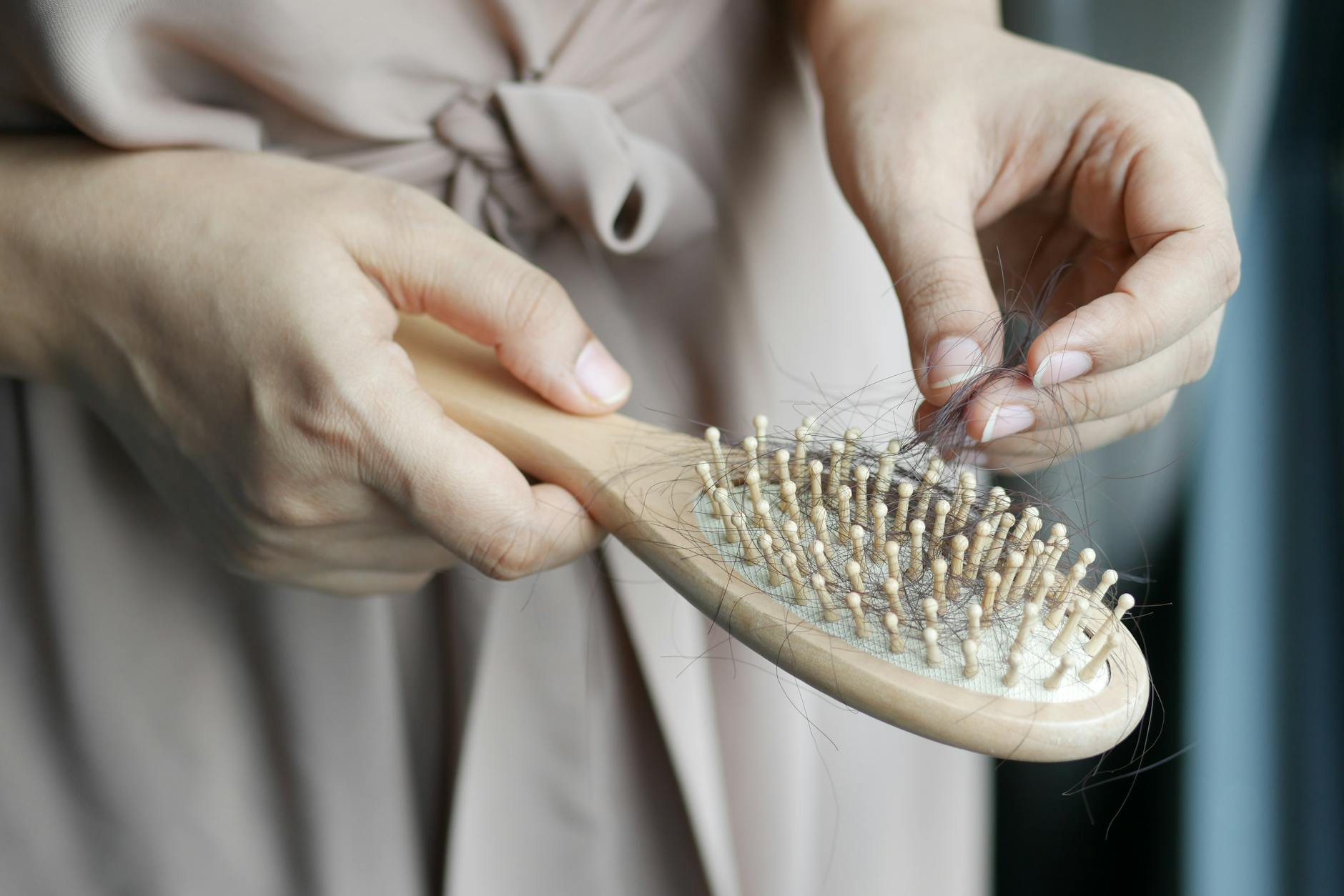
When I first noticed extra hair in the shower drain a few months into my GLP-1 journey, I panicked. Nobody had warned me about this. I’d read about nausea, about the appetite changes, about the injection site reactions — but hair loss? That was a surprise I really didn’t need on top of everything else.
If you’re experiencing the same thing, the first thing I want you to know is: you’re not alone, and it’s almost certainly not what you think it is.
Is Ozempic actually causing the hair loss?
Here’s the slightly counter-intuitive answer: technically, no. Ozempic, Wegovy, Mounjaro, and Zepbound are not directly causing your hair to fall out. The drug itself isn’t attacking your follicles.
What is causing it is the rapid weight loss that these medications produce — and that’s a very important distinction.
When your body loses weight quickly — through any method, not just GLP-1 medications — it can trigger a temporary condition called telogen effluvium. That’s a medical term for stress-induced hair shedding, and it’s far more common than most people realise.
What is telogen effluvium?
Your hair grows in cycles. At any given time, most of your hair (roughly 85–90%) is in an active growth phase called the anagen phase. The remaining 10–15% is in a resting phase called the telogen phase, after which those hairs fall out naturally and are replaced by new growth.
When your body experiences a significant physical stressor — rapid weight loss, surgery, a serious illness, giving birth, or severe nutritional deficiency — it can push a larger proportion of your hair follicles into the telogen (resting) phase at the same time. A few months later, all those resting hairs shed simultaneously.
This is why the timing feels confusing. The shedding typically happens two to four months after the triggering event — so you may have been on Ozempic for three or four months, feeling great about your weight loss, and then suddenly your hair starts going. The weight loss caused it; the timing is just delayed.
How common is it?
In clinical trials for Wegovy (semaglutide, the same active ingredient as Ozempic), hair loss was reported in about 3% of participants — compared to 1% of those taking a placebo. So it does happen more often on these medications than in the general population, but it’s not the majority experience.
Anecdotally, in online communities, the number reporting some degree of hair shedding seems higher — probably because people who experience it are more likely to post about it. But it’s worth keeping in perspective: most people on GLP-1 medications do not experience noticeable hair loss.
Will it stop?
In almost all cases: yes. Telogen effluvium is temporary. Once your body adjusts to the new weight and your nutritional intake stabilises, the hair cycle returns to normal. Most people see shedding slow down and stop within three to six months, with regrowth following shortly after.
It can feel alarming in the moment — especially if your hair is naturally fine or if you’re already sensitive about hair density. But the follicles themselves are not damaged. The hair comes back.
What can you actually do about it?
There’s no magic fix, but there are some genuinely useful things you can do to support your hair through this period:
1. Prioritise protein
One of the biggest drivers of hair loss on GLP-1 medications is not getting enough protein. These drugs suppress your appetite significantly, and many people end up eating so little that they’re not consuming enough of the building blocks hair needs to grow. Aim for at least 1.2–1.6 grams of protein per kilogram of body weight per day. Eggs, Greek yoghurt, lean meat, fish, legumes, and protein shakes are all good options — especially if your appetite is suppressed and full meals feel difficult.
2. Get your nutrient levels checked
Ask your doctor to check for iron deficiency (particularly ferritin levels), zinc, biotin, and vitamin D. These are the most common nutritional deficiencies linked to hair shedding, and they’re all common in people eating less than usual. If any are low, supplementing can make a real difference.
3. Don’t crash your calories
Faster isn’t always better. The more severe your calorie restriction, the more physical stress your body is under — and the more likely it is to shed hair. A moderate, sustainable deficit is kinder to your hair than an extreme one, even if the weight loss is slightly slower.
4. Be gentle with your hair
Avoid heat styling, tight hairstyles, and harsh chemical treatments while your hair is in a vulnerable phase. Use a wide-toothed comb, and be patient. This won’t stop the shedding, but it reduces additional breakage on top of the natural loss.
5. Consider a hair-specific supplement
Products like Nutrafol or Viviscal have reasonable evidence behind them for supporting hair growth during periods of stress. They won’t reverse telogen effluvium overnight, but many people find them helpful as part of a broader approach. Always check with your doctor before adding new supplements, particularly if you’re managing other health conditions.
When should you see a doctor?
If the shedding is severe, has been going on for more than six months, or if you’re noticing bald patches rather than general diffuse thinning, see your GP or a dermatologist. In rare cases, hair loss can signal something else going on — such as thyroid problems, which are worth ruling out regardless.
Also worth mentioning: if the hair loss is really distressing you, talk to your prescribing doctor about your dose. Some people find that slowing down the rate of weight loss — which may mean staying on a lower dose for longer — reduces the severity of the shedding.
The bottom line
Hair shedding on Ozempic or Wegovy is real, it’s more common than the official leaflets suggest, and it’s understandably upsetting. But it is not permanent, it is not caused by the drug directly damaging your follicles, and there are practical things you can do to support your hair through it.
Keep your protein up, get your nutrients checked, be gentle with your hair, and give your body time to adjust. Most people are through the worst of it within a few months — and by then, the weight loss benefits are well and truly showing up too.
Medical disclaimer: The content on this site is for informational purposes only and is not a substitute for professional medical advice. Always consult your GP or healthcare provider about any symptoms or concerns related to your medication.
Leave a Reply